+86-4000873883


Differences Between Compound Flow Dual-Inlet Closed Cooling Towers and Compound Flow Single-Inlet Closed Cooling Towers
Closed cooling towers employ three cooling configurations: compound flow closed cooling towers, counterflow closed cooling towers, and crossflow closed cooling towers.
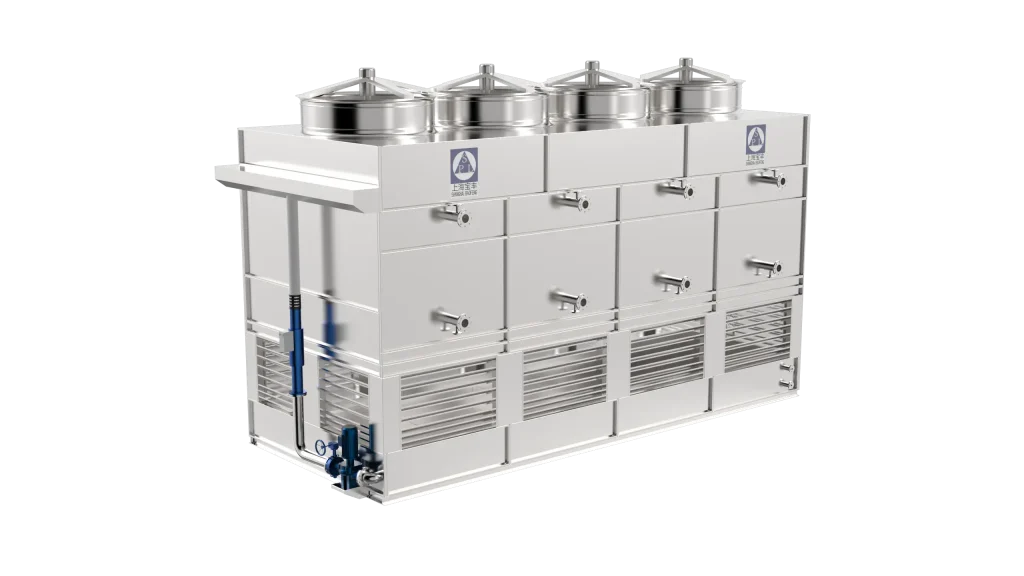
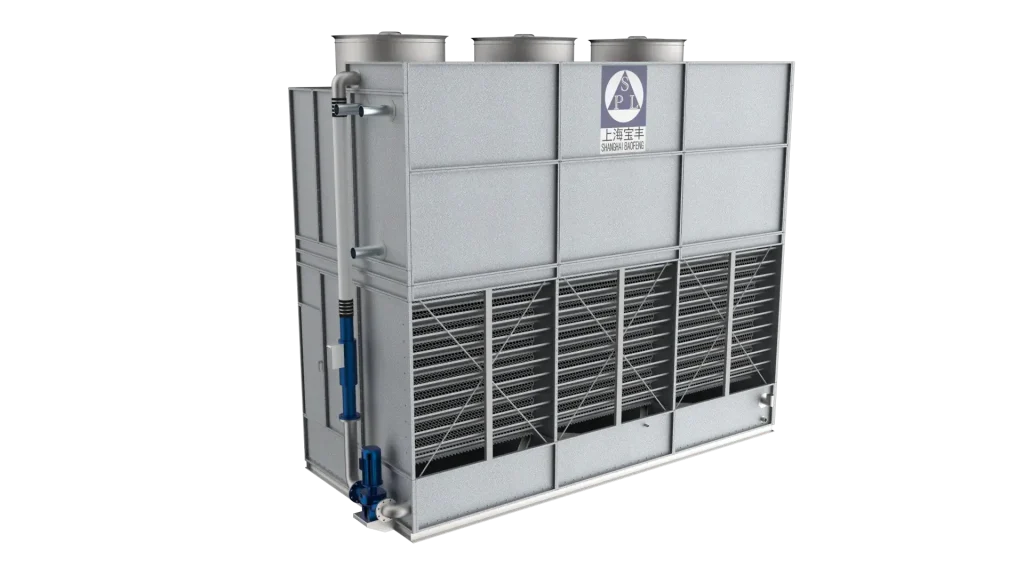
Compound flow closed cooling towers are categorised into compound flow single-inlet closed cooling towers and compound flow dual-inlet closed cooling towers. What distinguishes these two types?
1. Design Principles
Firstly, from a design perspective, the operating principle of the composite flow dual-inlet closed cooling tower is based on combined air-water flow. This involves installing two separate air duct systems within the cooling tower, each dedicated to either air intake or exhaust. This configuration enhances cooling efficiency. In contrast, the composite flow single-inlet closed cooling tower employs a single air duct system that handles both air intake and exhaust simultaneously.
2. Cooling Performance
Secondly, in terms of cooling efficiency, the dual-air-inlet closed cooling tower achieves superior performance due to its dual duct systems. This is because air intake and exhaust operate in staggered phases, ensuring thorough contact between hot air and the cooling medium, thereby enhancing heat exchange. While the single-air-inlet closed cooling tower, despite its single duct system, still achieves a certain level of cooling efficiency.
3. Footprint
Compared to single-inlet composite flow closed cooling towers, dual-inlet composite flow models feature more complex structures and occupy greater space. The requirement for two duct systems necessitates additional equipment and piping, demanding larger sites for tower installation.
Nevertheless, both the compound flow dual-inlet closed cooling tower and the compound flow single-inlet versus dual-inlet closed cooling tower demonstrate broad applicability in practical scenarios. They effectively cool high-temperature fluids, ensuring the uninterrupted operation of production processes. When selecting the appropriate cooling tower type, comprehensive consideration must be given to specific process requirements and site conditions.
4. Conclusion
In summary, composite flow dual-inlet closed cooling towers and composite flow single-inlet closed cooling towers differ in design principles, cooling efficiency, and footprint. Regardless of type, their fundamental purpose remains to fulfil industrial cooling requirements. Practical selection should prioritise suitability to specific conditions, ensuring efficient production operations.
Previous News
Chairman Peng Yinsheng of Shanghai Baofeng Mach...Next News
Can closed-circuit cooling towers replace conve...